
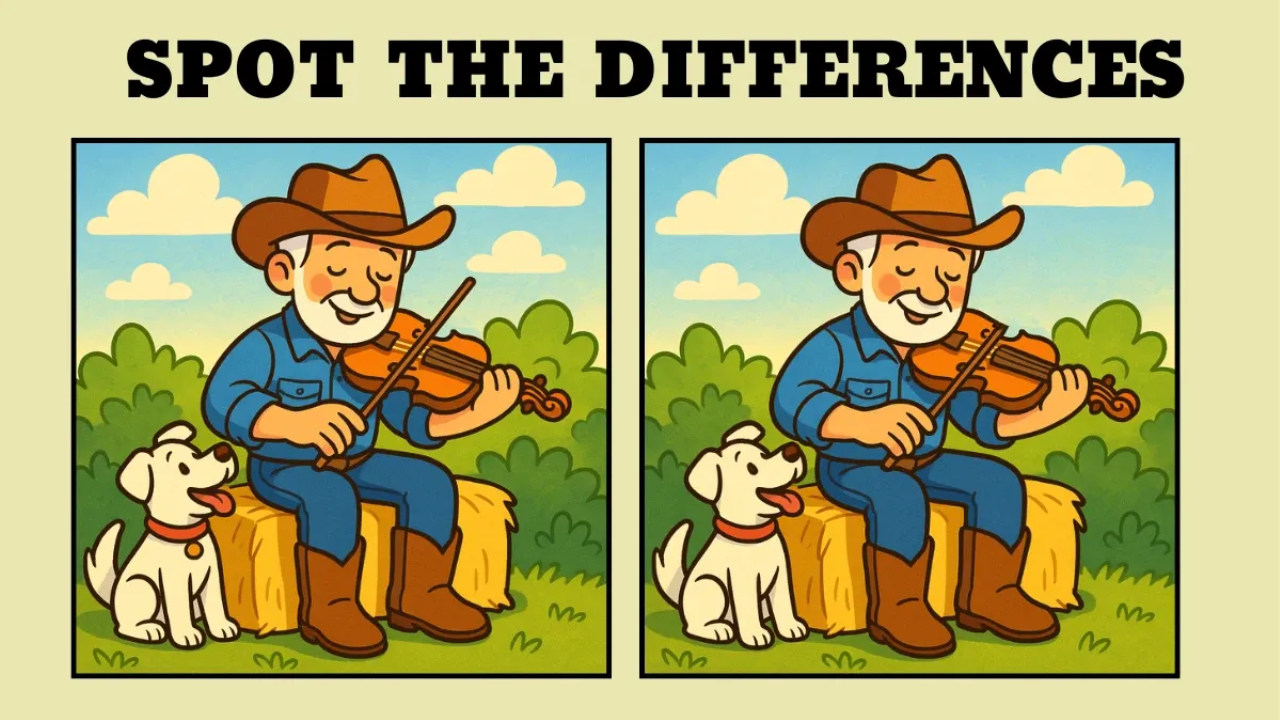
Are you ready for a thrilling visual challenge? If you’ve ever enjoyed a “Spot the Difference” puzzle, this one is sure to put your attention to detail to the test. The task is simple yet tricky: find three subtle differences between two pictures of a man playing the violin in just 14 seconds. The clock is ticking, and you need to act fast—your sharp eyes and quick reflexes are key to solving this puzzle before the timer runs out.
The Challenge: Can You Spot the Differences in 14 Seconds?
The images in front of you seem nearly identical at first glance. Both feature the same man in a similar setting, playing the violin with a dog sitting by his side. The background, his posture, and the violin all look quite similar, but if you look closely, there are a few key differences hiding in plain sight. Your challenge is to identify these three differences before the clock runs out.
While the puzzle may seem straightforward, the differences are subtle and might require you to look at the background, the positioning of the violin, or even the dog’s collar. It’s all about scanning the image carefully, identifying small inconsistencies, and reacting quickly. Ready to test your skills? Here’s what to look for in the puzzle.
The Differences You Need to Spot

While the two images might appear almost identical, there are three small but significant differences between them. Let’s break them down:
- A Subtle Cloud Difference: In the first image, you’ll notice a cloud in the sky. The cloud in the right image is shaped differently compared to its counterpart in the left. This is a small but noticeable difference in the background. As you look at the sky, focus on the cloud formations to spot this subtle change. It may be tricky to notice at first, but once you spot it, it’s clear.
- The Violin Detail: The violin in the man’s hands is nearly the same in both pictures, but if you look closely at the right image, you’ll see that there’s a small change in the violin’s body near the strings. This slight alteration makes the instrument look a little different from the left image. It could be the way the light reflects on the violin or a subtle change in its design. Pay attention to the shape and placement of the violin’s body to identify this difference.
- Dog’s Collar Tag: The dog sitting by the man’s side is another source of change. If you look at the collar near the dog’s neck in the right image, you’ll see that the tag or collar detail is slightly different. The circular tag or collar design doesn’t exactly match the version seen on the left image. This is a detail that can easily be missed if you’re not looking closely, but once you spot it, the difference stands out.
Why Spotting Differences Is More Than Just Fun
While spotting differences between two images might seem like a light-hearted game, there’s more to it than meets the eye. Engaging in puzzles like this offers several mental benefits that can help improve your cognitive abilities and overall mental sharpness. Here’s why practicing “Spot the Difference” puzzles is a great way to challenge your mind:
- Boosts Attention to Detail: One of the most obvious benefits of this kind of puzzle is that it helps you develop a keener eye for detail. Whether it’s in a professional setting or daily life, the ability to notice small changes or discrepancies can be incredibly valuable. Practicing puzzles like this trains your brain to pick up on subtleties you might otherwise overlook.
- Enhances Visual Perception: These puzzles require you to observe and analyze the visual elements of an image quickly. The more you practice, the better your brain becomes at processing visual information. This heightened visual perception can transfer to real-life situations where you need to quickly assess visual data, such as reading charts or noticing small changes in your environment.
- Improves Cognitive Flexibility: The ability to spot differences in a fast-paced challenge helps improve cognitive flexibility—the ability to switch between different tasks and ideas easily. By training your brain to quickly identify and adapt to changes in images, you’re enhancing your ability to think on your feet and solve problems with greater efficiency.
- Strengthens Focus and Concentration: Completing a “Spot the Difference” puzzle in a short amount of time requires deep focus and concentration. Regularly practicing such puzzles improves your ability to concentrate for longer periods and stay mentally engaged in tasks, which can be beneficial in both work and personal settings.
- Promotes Stress Relief: Taking a break and engaging in a visual puzzle can help reduce stress. When you focus intently on something fun and challenging, your mind is momentarily taken away from worries or distractions, offering a mental reset. This can leave you feeling more relaxed and rejuvenated after a quick mental workout.
Tips to Improve Your “Spot the Difference” Skills
If you didn’t manage to find all three differences in 14 seconds, don’t worry! Here are a few tips to help you improve your puzzle-solving skills:
