
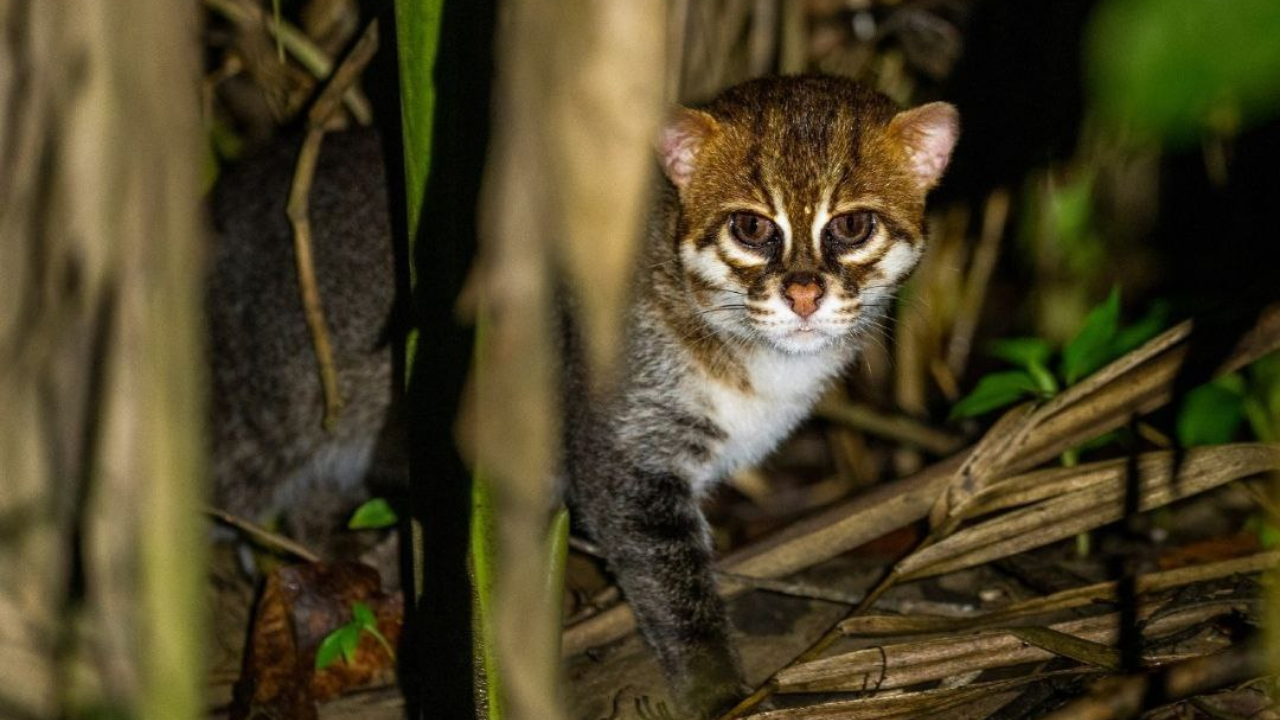
Flat-headed cats haven’t gone extinct in Thailand after all. A population is clinging on in the peat swamp forests of Princess Sirindhorn Wildlife Sanctuary, in the country’s south, after eluding detection for nearly three decades.
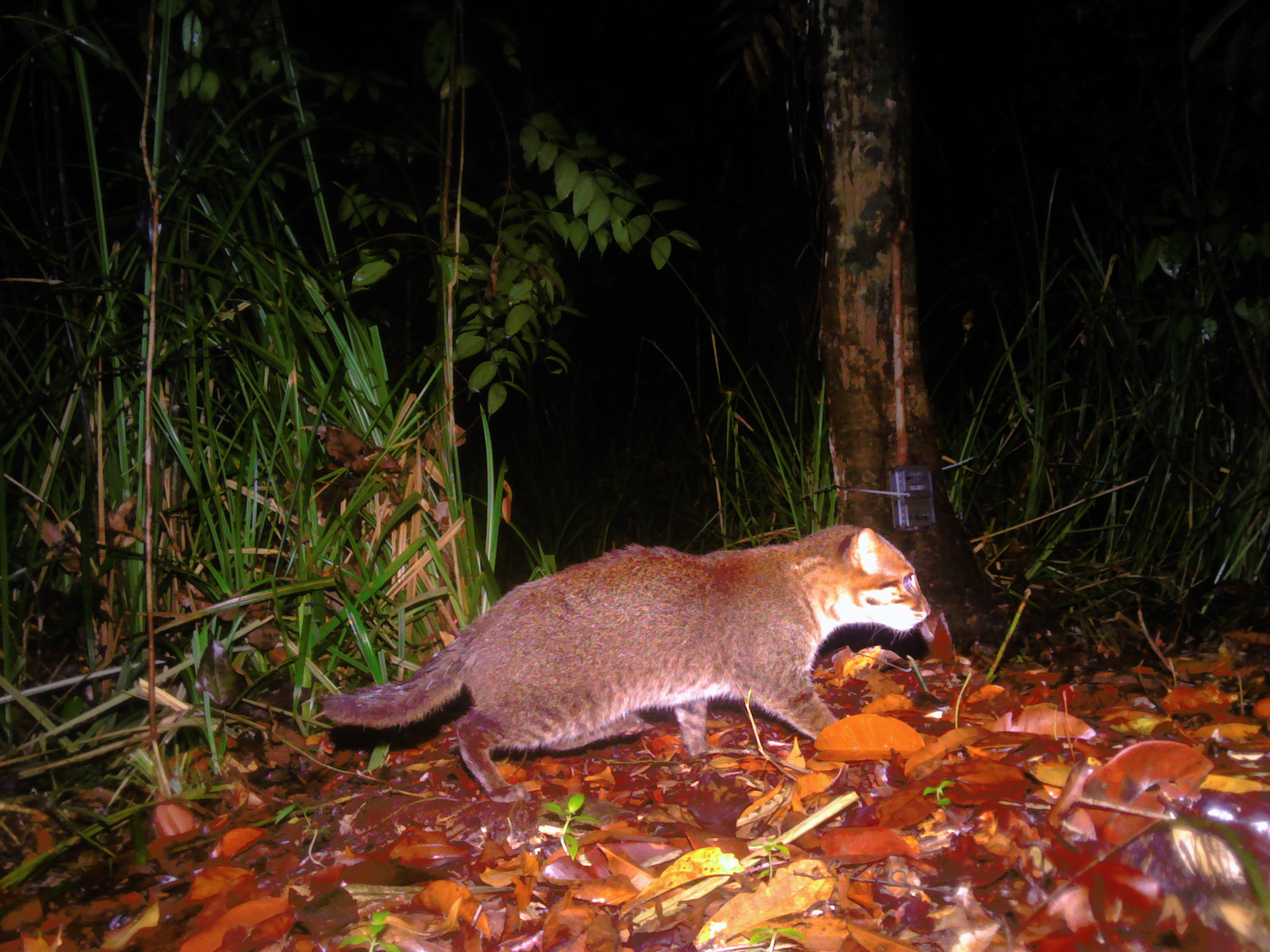
Camera traps set up by wildcat NGO Panthera and Thailand’s Department of National Parks, Wildlife and Plant Conservation (DNP) picked up 13 records of flat-headed cats (Prionailurus planiceps) in 2024 and a further 16 earlier this year.
“Rediscovering flat-headed cats in southern Thailand is an extraordinary moment for conservation,” Wai Ming Wong, Panthera’s small cat conservation science director, told Mongabay via email. In what Wong describes as a “profoundly encouraging” sign, they also spotted a female with a cub. “It shows that, where wetlands and river systems remain intact, even the most elusive and threatened carnivores can persist,” he added.
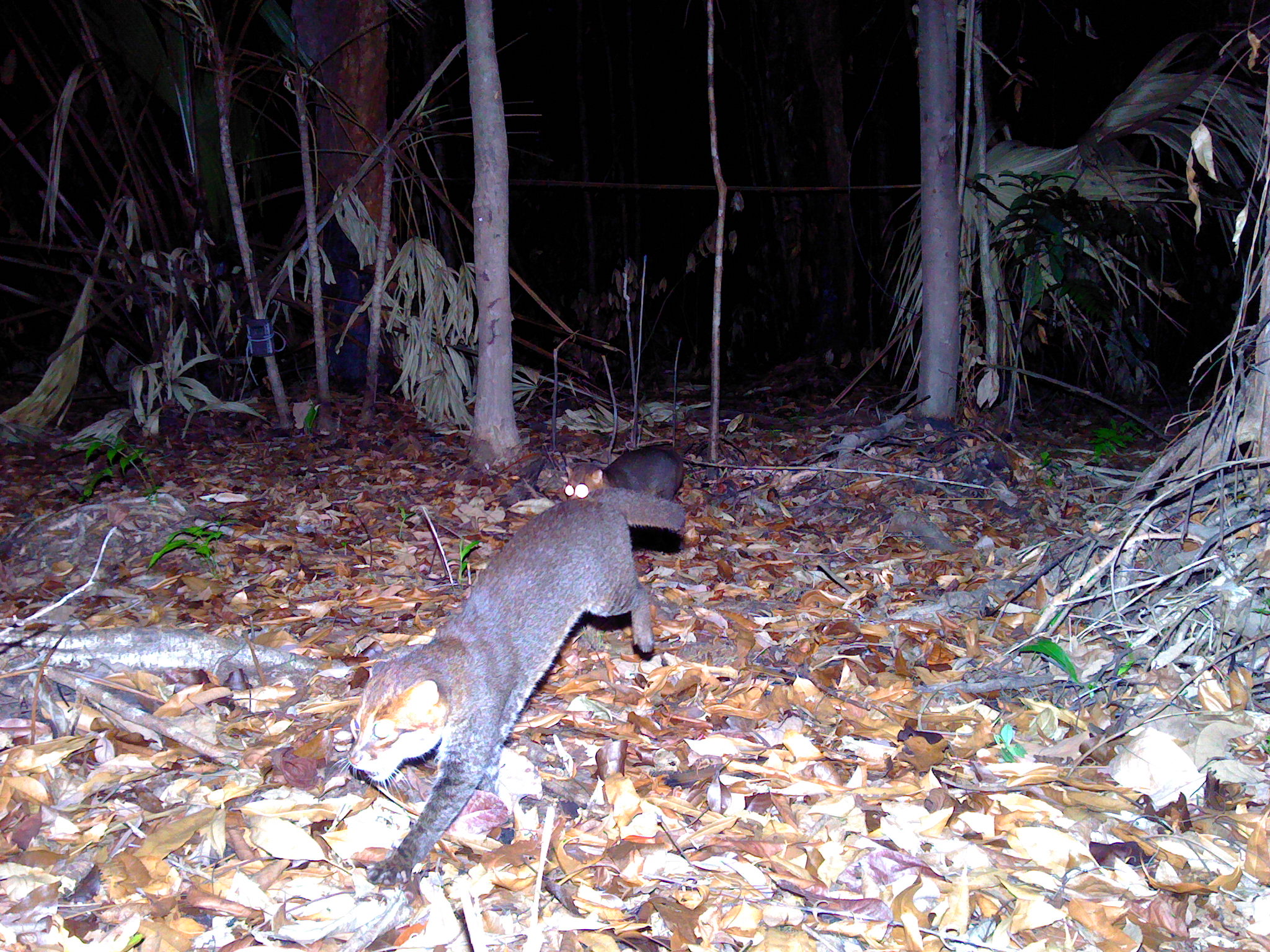
This elusive felid, one of the world’s most endangered and least-known wild cat species, was last spotted in the country by researchers in 1995 on the Thailand-Malaysia border. That led to the IUCN, the global wildlife conservation authority, declaring it was “possibly extinct” in Thailand, in its last assessment of the species, in 2014. Flat-headed cats are also present in wetlands and tropical rainforests in Borneo, Sumatra and Peninsular Malaysia, with the species’ total population estimated to be around 2,500 across its range.
When he heard the news of the rediscovery, Surasak Yimprasert, head of conservation, research and animal health at Songkhla Zoo in southern Thailand, said he was both happy and excited. “I thought that we probably wouldn‘t find flat-headed wild cats in Thailand anymore,” he wrote in an email. “I want people, both within and outside the area, to pay more attention to this species of animal that is on the verge of disappearing from the world.”
Thailand’s last population
Diminutive, shy and nocturnal, flat-headed cats are notoriously challenging to study. This rediscovered population is no exception. Access to the swampy forest in which it dwells requires battling through chest-high waters and tangles of mangroves.
These traits, and the terrain, no doubt helped the small cat elude the camera traps of researchers studying other species such as otters in the same area in recent years, according to Rattapan Pattanarangsan, Panthera’s conservation program manager for Thailand. Anecdotal reports had come from southern Thailand that fishers occasionally trapped flat-headed cats over the past decade, Pattanarangsan told Mongabay by phone.
On top of the difficulties in spotting or snapping images of these cats, they don’t have distinctive markings like other species, such as clouded leopards or tigers, complicating identification of individual cats. That means estimating the population or density is challenging. So far, surveys have been confined mostly to the forest edge, but the number of detections already suggests there could be a higher concentration of cats within the forest compared to elsewhere in their range.
That the flat-headed cat isn’t extinct in Thailand is clearly positive news, but it also raises the stakes on protecting this forest, as no other reports or sightings have been made elsewhere in Thailand. “We believe this may be the last remaining population [in Thailand], which puts it at considerable risk,” Pattanarangsan said.

A thorough threat assessment is still to be completed for Thailand’s newly rediscovered population.
Pattanarangsan said the area surrounding the forest was ravaged by fire due to drainage for the construction of a canal within the last decade, and warned that a repeat of this could be devastating. Other possible threats to address include habitat loss, pollution, wildlife disease, and capture for trade.
The announcement of the rediscovery must be followed by increased protection for the peat swamp forest, Pattanarangsan added, as there’s concern that wildlife traffickers may target the area. “As soon as we release the news, we need to strengthen the protection work.”.
Conservationists say they hope the rediscovery in Thailand will galvanize interest in the flat-headed cat across its range, as despite its highly endangered status it has historically suffered from limited research and conservation attention. “Because the flat-headed cat population in Thailand appears concentrated, this site could become an important research destination for experts worldwide,” Pattanarangsan said.
“This discovery also comes at a critical time, as we prepare the upcoming IUCN Red List assessment for the species,” Panthera’s Wong said. “Robust, up-to-date data like this is invaluable for accurately evaluating its status and guiding conservation priorities. It underscores the urgency of safeguarding Thailand’s remaining lowland habitats so that species like the flat-headed cat have a future.”
