
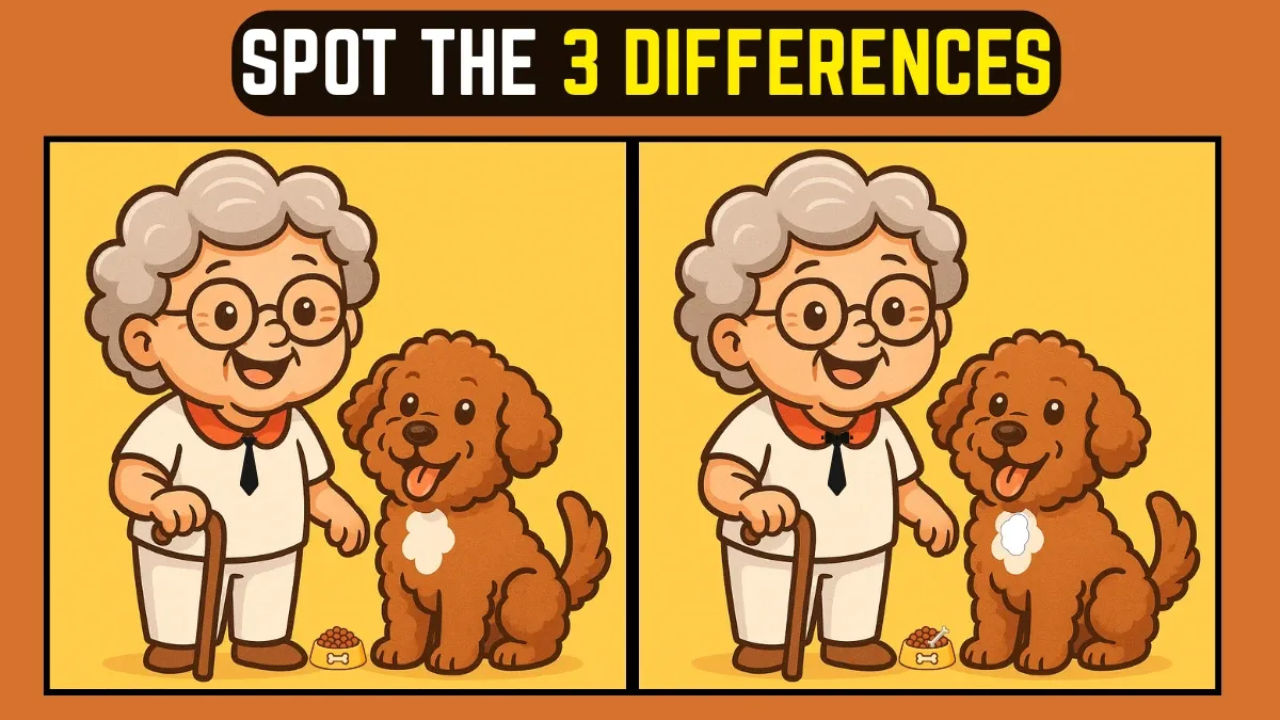
8-Second Challenge: Spot the 3 Differences in the Grandma and Dog Image:“Spot the Difference” puzzles have long been a popular pastime for those looking to test their observational skills. These engaging challenges are a fantastic way to keep your brain sharp while having fun. In this particular puzzle, your task is to identify three differences between two images of a grandma and her dog— but here’s the twist: you only have 8 seconds to spot all the changes! This challenge tests not only your attention to detail but also your ability to think quickly and process visual information under pressure.
Why Is This Puzzle So Challenging?
The challenge of spotting differences in a short amount of time requires rapid processing of visual information. In this specific puzzle, the images of the grandma and her dog may appear nearly identical, but subtle differences lurk within the details. These small changes are designed to challenge the brain’s ability to focus on the image and separate it from the overall pattern.
When tasked with identifying differences quickly, our brains tend to focus on the larger or more obvious objects in the picture, overlooking the smaller details. In addition, some of the differences may be so subtle that they’re difficult to spot unless you take a moment to scrutinize each element of the image carefully.
How to Tackle the Puzzle: Tips for Spotting the Differences

The key to solving any “Spot the Difference” puzzle lies in attention to detail. Here are a few tips to improve your chances of spotting the differences in this particular challenge:
- Focus on Smaller Details: Large objects in the image, such as the grandma and the dog, may not change much. Focus instead on smaller items, such as the dog’s collar, the grandma’s clothing, or items in the background, which are often where the changes occur.
- Scan Methodically: Instead of jumping around the image, try to focus on one section at a time. Start at the top left corner of the image and move row by row, scanning each part for inconsistencies. This helps prevent your eyes from wandering too quickly and missing key differences.
- Look for Color and Shape Changes: A lot of differences in “Spot the Difference” puzzles come from small changes in color, shape, or size. Pay close attention to details like the grandma’s clothing, the dog’s pose, and any objects that seem slightly altered in one image.
- Stay Calm Under Pressure: The 8-second time limit can make the puzzle feel intense, but it’s important to stay calm and focused. If you’re rushed, you may overlook important details. Take a deep breath and try to focus on one difference at a time.
- Practice Makes Perfect: The more you practice with these puzzles, the quicker you’ll become at spotting differences. Over time, you’ll improve your ability to quickly process visual data and enhance your observation skills.
The Benefits of Playing “Spot the Difference” Puzzles
While these puzzles are fun, they also provide several cognitive benefits. Engaging in this type of brain teaser can improve your focus and attention span, as you need to concentrate on the image for an extended period. Over time, this can translate into better performance in tasks that require sustained attention.
Spot the Differences in the Grandma and Dog Puzzle: What Are the Key Changes?
- Grandma’s Collar: In the second image, the grandma’s collar has undergone a change in both shape and color. This is the first difference to look for. The collar in the right image has a slightly different cut and hue, making it stand out against the otherwise identical image.
- Dog Treat Bowl: The second change can be found in the dog treat bowl. In the second image, a banana has been added next to the treats, which was not present in the first image. This difference is easy to spot once you focus on the bowl area.
- Dog’s Chest Patch: The third difference lies in the dog’s chest patch. The shape of the patch changes in the second image, making it a noticeable but subtle difference. It’s a perfect example of how small alterations in shape can make all the difference in solving these puzzles.
Each of these differences is designed to challenge your observation skills and memory. They’re not immediately obvious, requiring careful inspection and a sharp eye to identify them quickly.
