
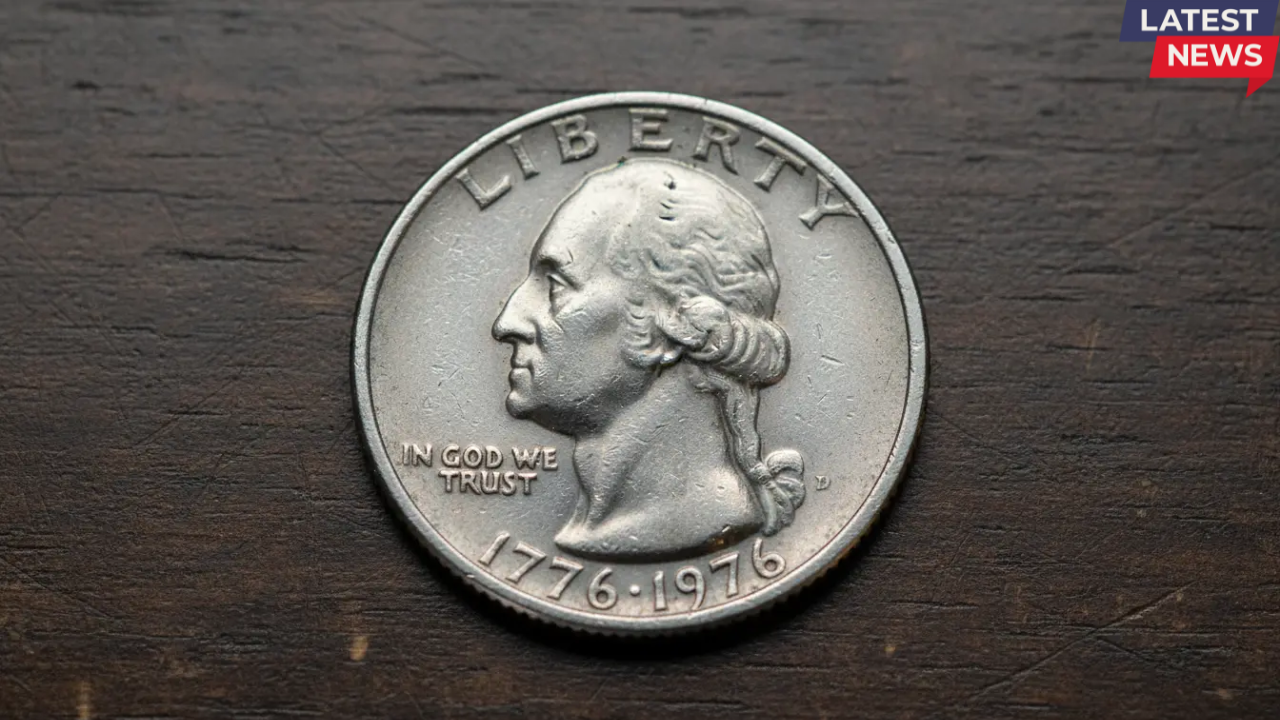
The claim that a 1976 Bicentennial Quarter could be worth up to $4 million has sparked massive interest among coin collectors and everyday Americans alike. While most Bicentennial quarters are worth only face value, a very small number of rare versions and error coins can be worth thousands — and in extreme cases, millions — of dollars.
What Is the 1976 Bicentennial Quarter?
The Bicentennial quarter was issued in 1975 and 1976 to commemorate 200 years of American independence. Instead of the usual eagle design, the reverse features a Colonial drummer with a torch surrounded by 13 stars.
- Obverse: George Washington
- Reverse: Colonial drummer
- Date: 1776–1976
- Mint Locations: Philadelphia (no mint mark), Denver (D), San Francisco (S)
Is Any Bicentennial Quarter Really Worth $4 Million?
Yes — but only under extremely rare conditions. The multi-million-dollar valuation applies to unique error coins or ultra-rare prototype strikes, not standard circulation coins.
Most Bicentennial quarters are worth 25 cents to a few dollars. However, a few exceptional specimens have sold for six or seven figures due to rarity, condition, and minting errors.
Key Features That Make a Bicentennial Quarter Valuable
1. Struck on the Wrong Metal (Mint Error)
Some of the most valuable quarters were mistakenly struck on silver planchets or foreign coin blanks. These errors are extremely rare and highly prized.
2. 40% Silver Bicentennial Quarter (San Francisco Mint)
The San Francisco Mint produced special collector versions made of 40% silver. These are marked with an “S” mint mark and are heavier than regular quarters.
- Weight: ~5.75 grams
- Normal quarter: ~5.67 grams
3. Double Die Errors
Look for doubling in:
- “LIBERTY”
- “IN GOD WE TRUST”
- Drummer details
Strong double die errors can be worth $5,000 to $50,000+.
4. Off-Center or Misaligned Strikes
Coins struck off-center or with missing design elements can be extremely valuable depending on severity.
5. Proof Coins in Perfect Condition (PR70)
Perfectly preserved proof coins graded PR70 by PCGS or NGC are rare and can command very high prices.
How to Identify a Rare Bicentennial Quarter at Home
- Check the Mint Mark: Look for an “S” below Washington’s ponytail.
- Weigh the Coin: Use a digital scale to detect silver content.
- Inspect for Errors: Use a magnifying glass for doubling or misprints.
- Check Edge Color: Silver coins lack the copper stripe.
- Assess Condition: Uncirculated coins are far more valuable.
What Should You Do If You Think You Found One?
If your quarter shows unusual features:
- Do not clean the coin
- Store it in a protective holder
- Get it authenticated by PCGS or NGC
- Consult a professional coin dealer or auction house
Common Bicentennial Quarter Values (Reality Check)
| Type | Estimated Value |
|---|---|
| Regular circulation | $0.25 – $1 |
| 40% Silver (S mint) | $5 – $20+ |
| Minor error coins | $50 – $500 |
| Major mint errors | $5,000 – $100,000+ |
| Ultra-rare prototype/errors | Up to $4 million* |
*Only verified, one-of-a-kind specimens in top condition
Final Verdict
While the idea of a $4 million Bicentennial quarter is real, it applies only to extraordinarily rare error coins. Most Bicentennial quarters are common, but it’s still worth checking — because rare finds do exist.
If you enjoy coin collecting or treasure hunting, the 1976 Bicentennial Quarter remains one of the most exciting U.S. coins to search for.
Tip: Always rely on professional grading and verified sales — not viral social media claims.
