
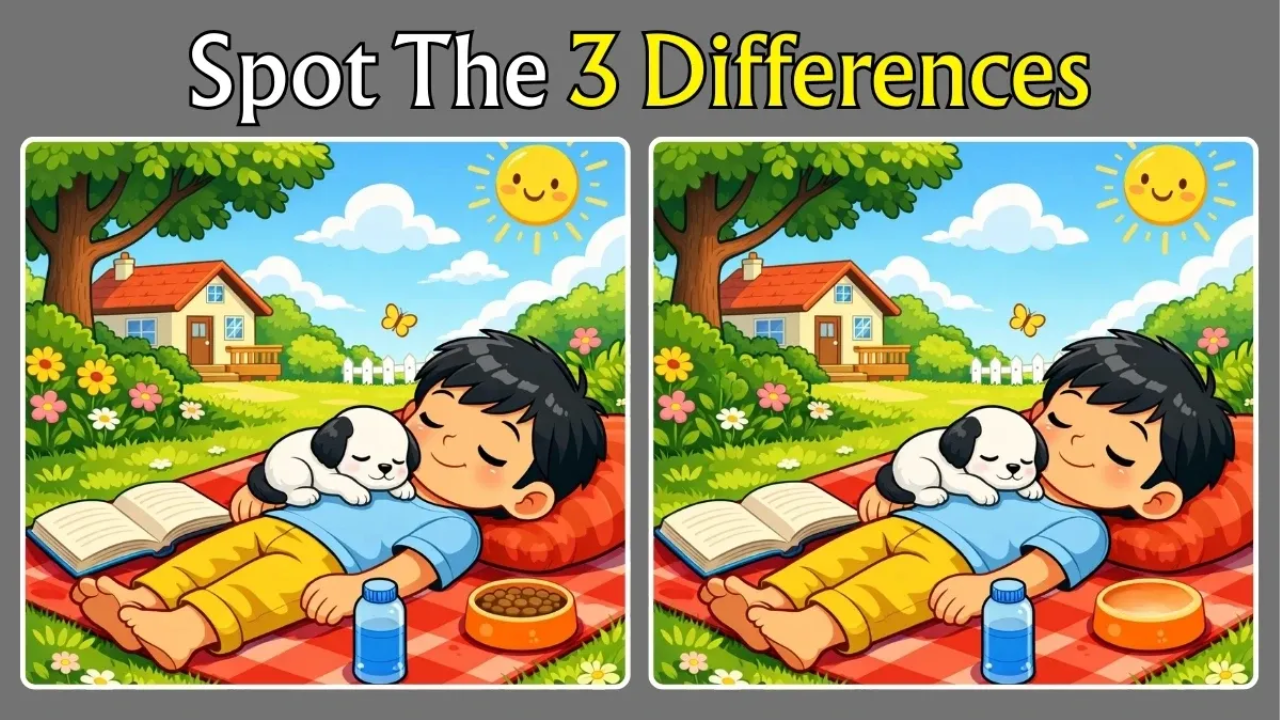
12-Second Challenge: Spot the 3 Differences in the Dog and Boy Picture: Optical illusions and visual puzzles have a unique way of testing our brain’s abilities, and “Spot the Difference” challenges are among the most popular. These puzzles are deceptively simple but often tricky, providing an engaging way to exercise attention to detail. In this specific challenge, your task is to spot three subtle differences between two images of a boy relaxing with his dog. But there’s a catch—you only have 12 seconds to identify all the changes! Ready to put your observational skills to the test?
8-Second Challenge: Spot the 3 Differences in the Grandma and Dog Image
The Thrill of “Spot the Difference” Puzzles
“Spot the Difference” puzzles are timeless in their appeal. Found in newspapers, magazines, books, and digital platforms, these puzzles challenge our visual perception and focus. The task seems easy at first: identify the differences between two nearly identical images. But as you look closer, it becomes evident how subtle the changes can be. These puzzles have remained popular because they offer a mental workout for all ages, providing an excellent exercise in observation and concentration.
The Challenge: Spotting the Differences
The puzzle presents a unique challenge. While one would expect the differences to be immediately obvious, the mind plays tricks on us. The changes are subtle enough to make your brain fill in the blanks, leading you to believe the images are identical. But the clock is ticking, and you only have 12 seconds to find the differences. So, let’s dive deeper into the process.
Why Are “Spot the Difference” Puzzles So Effective?
“Spot the Difference” puzzles tap into the way our brain processes visual information. When we see two similar images, our brains look for patterns and automatically assume that they’re the same. However, the brain isn’t always perfect, and it tends to miss small discrepancies when faced with near-identical pictures. This is exactly where the challenge lies: spotting those tiny details that disrupt the pattern.
How to Approach “Spot the Difference” Puzzles
When tasked with solving a “Spot the Difference” puzzle, it’s important to approach the images methodically. Here are some tips for finding the differences:
- Focus on the Background: Changes often occur in the background, where objects may be shifted, resized, or altered in color. In this puzzle, pay attention to the details in the sky, trees, and ground.
- Look for Subtle Changes in Shape or Color: Differences may be as subtle as a color shift, a change in the shape of an object, or the addition or removal of a small item. The dog’s food bowl or the shape of leaves in the tree may hold the key.
- Scan for Items That Stand Out: The eye often catches differences that stand out immediately. Look for objects or items in the image that seem slightly out of place. These could be clues to finding the differences.
- Take a Systematic Approach: Instead of jumping around the image, start from one corner and work your way across. This method ensures that you don’t miss any changes and helps you focus on each part of the image.
- Practice: The more you practice, the quicker you will become at spotting differences. Regularly working on these puzzles helps train your brain to spot visual anomalies in less time.
The Solution: Did You Find All the Differences?

If you were able to find all three differences within the 12-second limit, congratulations! Here’s a breakdown of the subtle changes in the images:
- The Cloud: In the second image, the cloud near the boy is missing a small detail. It’s a tiny difference, but it stands out once you notice it. The cloud’s shape is altered, making it a key difference to focus on.
- The Dog’s Food: In the second image, there’s a small but noticeable change in the dog’s food. A piece of food that was present in the first image has disappeared, making it an important clue.
- The Tree on the Right: The final difference can be found in the tree near the top right corner of the image. One of the leaves has been altered slightly, changing its shape and making it a subtle but significant change.
These differences are small enough to challenge your observational skills but not so difficult that they are impossible to find with a little focus. Once you spot them, it’s fascinating how they were hidden in plain sight, proving the power of subtlety in these puzzles.
The Cognitive Benefits of “Spot the Difference” Puzzles
These types of puzzles do more than just entertain—they offer valuable cognitive benefits. Engaging in “Spot the Difference” puzzles helps improve various cognitive functions:
- Attention to Detail: These puzzles require careful observation and the ability to pick up on small changes, improving your ability to focus on details in everyday life.
- Memory Enhancement: By constantly comparing two images and remembering the differences, you’re training your brain to retain visual information more effectively.
- Improved Pattern Recognition: Spotting differences between two images trains your brain to recognize subtle patterns and inconsistencies, a skill that can be applied to problem-solving in other areas of life.
- Visual Processing Speed: As you practice more, your brain becomes quicker at processing visual information, which helps improve reaction times and decision-making speed.
Why People Love “Spot the Difference” Puzzles
One of the reasons “Spot the Difference” puzzles remain popular is their versatility. They can be enjoyed by people of all ages, from children to adults, and they’re easy to adapt to various levels of difficulty. Whether you’re solving puzzles in a magazine or on a mobile app, they provide a quick and engaging way to exercise your brain.
